Falling Leaves Throw Blanket: Free Beginner Crochet Pattern
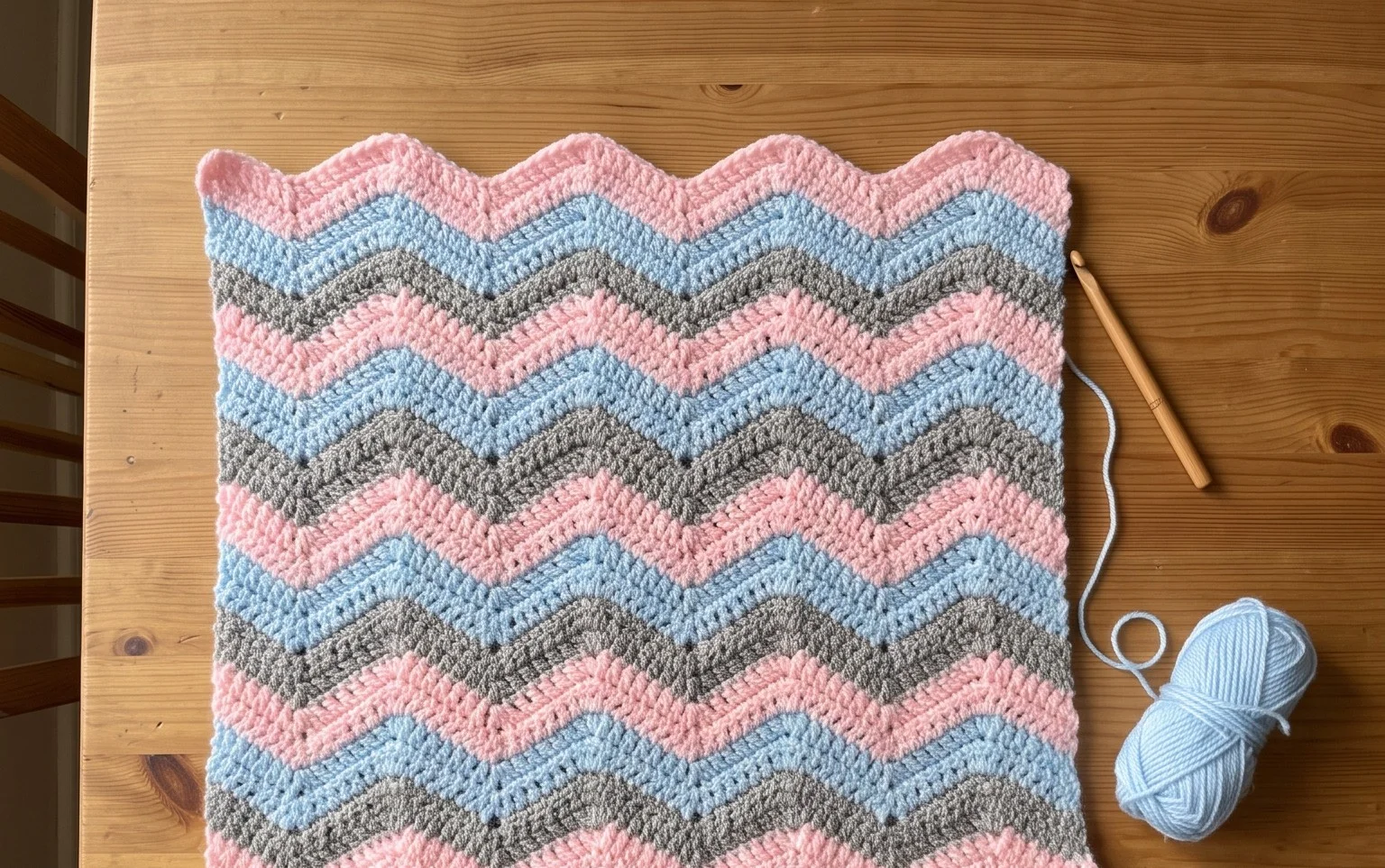
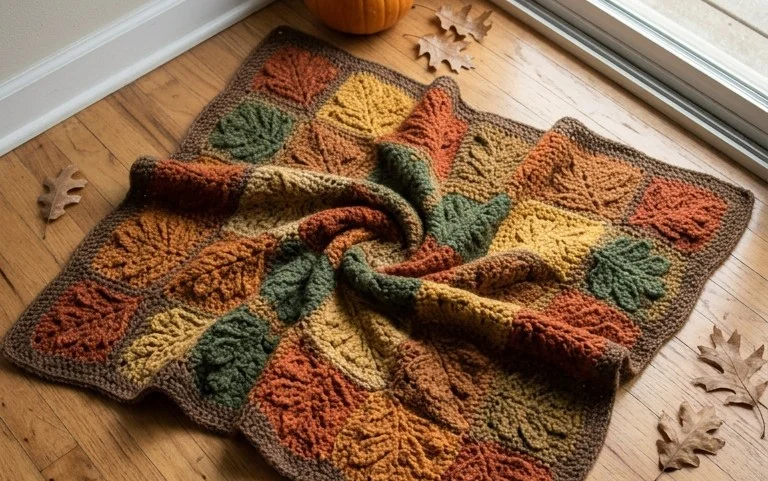
The weight of this blanket across your lap feels like a warm autumn afternoon spent watching the trees turn shades of gold and amber. Soft, squishy yarn worked into a rhythmic pattern keeps your hands busy while you settle into the sofa for a movie. It works well for someone picking up a crochet hook for the first time or a long-time maker who needs a reliable project to finish over a few quiet weekends. You will work through simple stitches that create a beautiful, dense fabric, resulting in a cozy gift that any home decor lover would enjoy displaying on a living room chair.
Why You’ll Love This Pattern
The Classic Crochet Cotton Dishcloth is a foundational project that relies on the durable properties of 100% cotton yarn to create a functional household staple. This pattern is exceptionally beginner-friendly, requiring knowledge of only two basic stitches to build a textured, absorbent fabric that holds up well through heavy daily use and frequent machine washing. Because it works up quickly in under two hours, it serves as an ideal choice for testing new yarn colors or clearing out leftover partial skeins from larger projects. The resulting square provides a gentle yet effective scrubbing surface for glassware, non-stick pans, and countertops.
I managed to finish three of these over a single weekend while watching television. The texture is much thicker and more useful than the store-bought versions I have been using for years.
— Sarah, home crafter
Pattern Overview & Skill Level
- Skill Level: Beginner
- Approximate Time: 1 to 2 hours
- Construction: Worked in rows with a turning chain to create a flat square
- Finished Dimensions: 8 inches by 8 inches
Materials & Supplies Needed
- Yarn: Worsted weight (#4), 100% cotton, approximately 50 yards per dishcloth.
- Hook Size: 5.0 mm (H-8) crochet hook.
- Notions: Tapestry needle for weaving in ends and scissors.
- Safe Yarn Substitutions: You may use a cotton-acrylic blend, though 100% cotton is recommended for maximum absorbency. Using a lighter weight yarn will result in a smaller cloth, while a heavier yarn may create a cloth that is too stiff for tight corners.
Stitch Guide & Abbreviations (US Terms)
- ch: Chain
- sc: Single crochet (insert hook, yarn over, pull up loop, yarn over, pull through two loops)
- dc: Double crochet (yarn over, insert hook, pull up loop, yarn over, pull through two loops, yarn over, pull through remaining two loops)
- st/sts: Stitch/stitches
- turn: Turn your work to begin the next row
Step-by-Step Pattern Instructions
Main Cloth
- Row 1: Ch 30. Sc in the second ch from hook and in each ch across. Turn. (29 sts)
- Row 2: Ch 2 (counts as first dc). Skip the first sc, dc in the next sc, and in each sc across to the end. Turn. (29 sts)
- Row 3: Ch 1 (does not count as st). Sc in each st across, placing the final sc in the top of the turning chain from the previous row. Turn. (29 sts)
- Rows 4–30: Repeat rows 2 and 3 until the piece measures 8 inches in height.
Finishing
After completing the final row, fasten off the yarn, leaving a 6-inch tail. Use your tapestry needle to weave the tail back and forth through the stitches on the back side of the cloth. Trim any excess yarn close to the fabric to ensure a neat, secure edge.
Care & Washing Instructions
- Machine wash on a warm setting (up to 140°F) to sanitize the cotton fibers.
- Tumble dry on low heat or lay flat on a towel to air dry to prevent shrinkage.
- Avoid using fabric softener, as it leaves a waxy residue that reduces the water-wicking ability of the cotton.
Pro Tips & Common Mistakes to Avoid
Maintaining consistent tension is essential for a square result; if your edges look uneven, try going down a half-hook size to tighten the stitches. Always use a stitch marker in the first stitch of every row to ensure you are not accidentally dropping stitches at the end of the row, which is the most common cause of a trapezoid-shaped dishcloth. To weave in your ends invisibly, thread the tail through the tapestry needle and run it underneath the base of the stitches on the wrong side rather than through the middle of them. If you wish to adjust the size, simply add or subtract chains in multiples of two; remember that increasing the width will require you to work more rows to maintain a square shape, which will increase your total yarn usage.
Frequently Asked Questions
Can I use a larger hook for this pattern?
Using a larger hook will result in a looser, more open fabric. While this makes the cloth work up faster, it will be less effective at scrubbing dishes and may lose its shape more quickly during washing.
Is it okay to sell the items I make from this pattern?
You are welcome to sell finished dishcloths made from this pattern at local craft fairs or online shops. Please ensure you use your own photographs to represent the product.
Why is my dishcloth curling at the edges?
Curling usually happens when your foundation chain is too tight or your tension is too loose. Try using a hook one size larger specifically for the foundation chain to ensure it has enough stretch, or ensure you are not pulling the yarn too tightly on the first row.
Can I substitute a different cotton blend?
Yes, any worsted weight cotton or cotton blend will work. Keep in mind that blends containing polyester or acrylic may be slightly less absorbent than 100% cotton, but they often dry faster, which can help prevent mildew buildup.
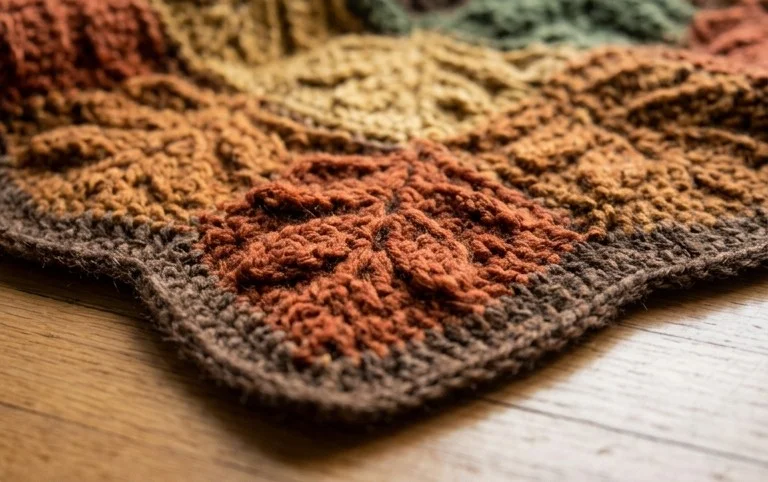
Wrap yourself in the comfort of your own creation and enjoy the warmth provided by your hard work. Consider swapping the traditional earth tones for a bold, monochromatic blue or a variegated yarn to add a modern twist to your living space. If you decide to make this blanket, post a photo of your finished work online so others can see how your color choices turned out. Feel free to browse the rest of the blog for more patterns that use similar, straightforward techniques to fill your home with handmade items.